
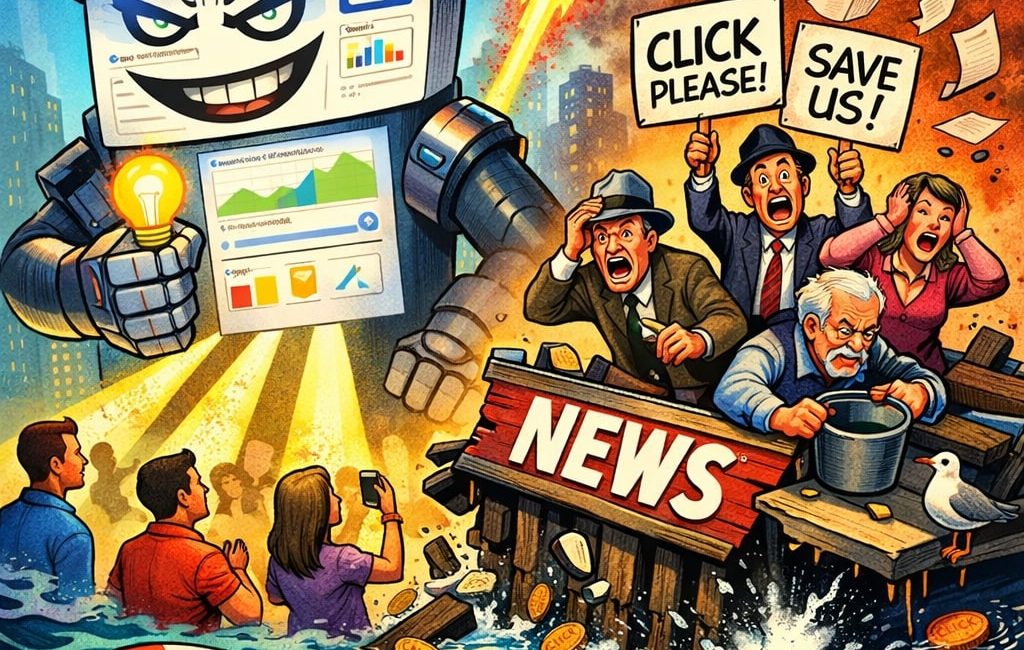
γράφει ο Άκης Λιάντζουρας, Co-Founder
Υπήρχε για χρόνια μια άτυπη, σχεδόν κυνική ισορροπία στο διαδίκτυο. Τα sites έγραφαν, οι μηχανές αναζήτησης έφερναν κόσμο, τα banners απέδιδαν κάτι που έμοιαζε με έσοδο και όλοι προσποιούνταν ότι αυτό λέγεται «βιώσιμο μοντέλο». Κανείς δεν ήταν πραγματικά ικανοποιημένος, αλλά όλοι έπαιζαν το παιχνίδι. Σήμερα, αυτό το παιχνίδι τελείωσε. Όχι με πάταγο, όχι με ανακοίνωση. Απλώς… σταμάτησε να πληρώνει.
Το λένε zero-click search. Εγώ το διαβάζω αλλιώς: είναι η στιγμή που το internet είπε καθαρά πως δεν έχει πια ανάγκη τα sites ως ενδιάμεσους μεταξύ ερώτησης και απάντησης. Ο χρήστης ρωτά, η απάντηση εμφανίζεται, η ιστορία τελειώνει εκεί. Κανένα κλικ. Καμία επίσκεψη. Καμία «ευκαιρία monetization».
Ας μιλήσουμε με αριθμούς, γιατί ο διαφημιστής όταν ακούει μόνο θεωρία μυρίζει πρόβλημα. Σήμερα, περίπου 58–65% των αναζητήσεων παγκοσμίως δεν οδηγούν σε κανένα κλικ. Στο mobile, το ποσοστό ξεπερνά το 70%. Στις ειδήσεις, στον καιρό, στα χρηματιστήρια, στα «τι έγινε χθες», το κλικ έχει καταντήσει σπάνιο είδος. Ο λόγος είναι απλός και ωμός: η Google και οι όμοιοί της δίνουν την απάντηση επιτόπου. Snippets, AI σύνοψη, panels γνώσης. Ο χρήστης παίρνει αυτό που θέλει μέσα σε τρία δευτερόλεπτα. Εσύ μένεις με το άρθρο αδιάβαστο και τα analytics άδεια.
Για τα sites που είχαν μάθει να «πουλάνε κλικ», αυτό δεν είναι τεχνική αναβάθμιση. Είναι υπαρξιακό σοκ. Για χρόνια, το μοντέλο ήταν απλό: traffic, impressions, CPM, μισθοί, ενοίκιο, ξανά από την αρχή. Το zero-click έκανε κάτι εξαιρετικά βίαιο: έκοψε τη ροή στην πηγή. Λιγότερες σελίδες, χαμηλότερα CPM, programmatic διαφήμιση που θυμίζει ξεπούλημα στο τέλος σεζόν. Και ξαφνικά όλοι αναρωτιούνται γιατί «δεν δουλεύει πια το SEO», λες και το SEO ήταν ποτέ στρατηγική και όχι παυσίπονο.
Το κρίσιμο ερώτημα έρχεται αμείλικτο: μπορούν να επιζήσουν τα sites ειδήσεων; Η απάντηση είναι ναι — αλλά όχι ως sites ειδήσεων με την παλιά έννοια. Όσοι συνεχίσουν να αναπαράγουν πληροφορία, να γράφουν το ίδιο θέμα με διαφορετική σύνταξη, να απαντούν απλώς στο τι, ποιος και πότε, είναι πρώτες ύλες. Και οι πρώτες ύλες, όταν γίνονται commodity, δεν έχουν περιθώριο κέρδους. Τις καταναλώνει η μηχανή και προχωρά.
Αντίθετα, επιβιώνουν —και αρχίζουν να αποκτούν πραγματική αξία— εκείνοι που μετατρέπουν το περιεχόμενο σε προορισμό. Όχι για να μάθεις απλώς τι έγινε, αλλά για να καταλάβεις τι σημαίνει. Ανάλυση αντί για αντιγραφή. Πλαίσιο αντί για αποσπασματικό θόρυβο. Θέση αντί για άχρωμη, δήθεν ουδετερότητα. Ο αναγνώστης δεν επιστρέφει για το νέο· επιστρέφει για τη ματιά. Για τη φωνή.
Εδώ γίνεται και η πραγματική μετάβαση, που δεν είναι τεχνική αλλά ψυχολογική. Από το «φέρνω κόσμο» στο «χτίζω σχέση». Τα media που αντέχουν δεν πανηγυρίζουν για impressions. Κοιτάνε open rates 30–45% στα newsletters, μετράνε direct traffic, βλέπουν αν ο κόσμος τους θυμάται χωρίς να τους ψάξει. Δεν είναι απλώς sites. Είναι brands που τυχαίνει να έχουν site.
Και φυσικά, τα λεφτά δεν είναι πια στα banners. Το banner είναι το τελευταίο στάδιο άρνησης. Τα βιώσιμα μοντέλα είναι αλλού: συνδρομές, memberships, branded content με πραγματική επιρροή και όχι απλώς views, events, κοινότητες, προϊόντα γνώσης, B2B υπηρεσίες που πατούν πάνω στο media brand. Το site παύει να είναι το προϊόν. Γίνεται η απόδειξη ότι αξίζεις να πληρωθείς αλλιώς.
Η μεγάλη αλήθεια που πολλοί αποφεύγουν να πουν είναι απλή: το zero-click search δεν σκοτώνει την ενημέρωση. Σκοτώνει τη μέτρια ενημέρωση. Σκοτώνει το άχρωμο, το αντιγραφικό, το «γράφουμε για να ανέβουμε». Αντίθετα, ανταμείβει την ταυτότητα, τη θέση, το θάρρος να μη σε χρειάζονται όλοι.
Το internet δεν τελείωσε. Τελείωσε η εποχή που πληρωνόσουν επειδή απλώς στεκόσουν ανάμεσα στον χρήστη και την απάντηση. Στην εποχή του zero-click, δεν πληρώνεσαι για να σε βρουν. Πληρώνεσαι για να σε εμπιστεύονται. Και, όσο κι αν πονάει, αυτή είναι ίσως η πιο τίμια αγορά που υπήρξε ποτέ.
Zero-Click Search: the moment the internet decided it no longer needs middlemen
by Akis Liantzouras, Co-Founder
For years there was an unspoken, almost cynical balance on the internet. Websites produced content, search engines delivered audiences, banners generated something resembling revenue, and everyone pretended this was called a “sustainable model.” No one was truly satisfied, but everyone kept playing along. Today, that game is over. Not with a bang, not with a press release—just with silence. It simply stopped paying.
They call it zero-click search. I read it differently: it’s the moment the internet clearly stated that it no longer needs websites as intermediaries between a question and an answer. The user asks. The answer appears. The story ends there. No click. No visit. No monetization opportunity.
Let’s talk numbers, because a marketer who hears only theory smells trouble. Today, roughly 58–65% of searches worldwide result in no clicks at all. On mobile, that figure exceeds 70%. In news, weather, markets, and every “what happened yesterday” query, the click has become an endangered species. The reason is blunt and obvious: Google and its peers now deliver the answer directly. Snippets. AI summaries. Knowledge panels. The user gets what they want in seconds. You’re left with an unread article and empty analytics.
For websites that were built to “sell clicks,” this isn’t a technical update. It’s an existential shock. For years, the model was straightforward: traffic, impressions, CPMs, salaries, rent—repeat. Zero-click did something brutally simple: it cut the flow at the source. Fewer pageviews, lower CPMs, programmatic advertising that feels like a clearance sale at the end of the season. And suddenly everyone asks why “SEO doesn’t work anymore,” as if SEO was ever a strategy rather than a painkiller.
The unavoidable question follows: can news sites survive? The answer is yes—but not as news sites in the old sense. And this is where it hurts. Those who continue to merely reproduce information, rewriting the same story with different phrasing, answering only the what, who, and when, are raw material. And when information becomes a commodity, margins disappear. The machine consumes it and moves on.
Those who survive—and begin to matter—are the ones who turn content into a destination. Not a place to learn what happened, but a place to understand what it means. Analysis instead of copy-paste. Context instead of fragmented noise. A point of view instead of colorless, pretend neutrality. Readers don’t return for the news; they return for the lens through which it’s interpreted.
This is where the real shift happens, and it’s not technical—it’s psychological. From “bringing traffic” to “building relationships.” The media brands that endure don’t celebrate impressions. They track 30–45% open rates on newsletters, measure direct traffic, and see whether people remember them without searching. They’re not just websites. They’re brands that happen to have a website.
And, of course, the money is no longer in banners. Banners are the final stage of denial. Viable models now live elsewhere: subscriptions and memberships, branded content with real influence rather than views, events, communities, knowledge products, B2B services built on top of the media brand. The website stops being the product. It becomes proof that you deserve to be paid differently.
The uncomfortable truth many avoid is simple: zero-click search doesn’t kill information. It kills mediocre information. It kills the bland, the derivative, the “we write to rank.” In contrast, it rewards identity, perspective, and the courage not to be for everyone.
The internet didn’t end. What ended was the era in which you were paid simply for standing between the user and the answer. In the age of zero-click, you’re not paid to be found. You’re paid to be trusted. And as painful as that may be, it’s probably the most honest market we’ve ever had